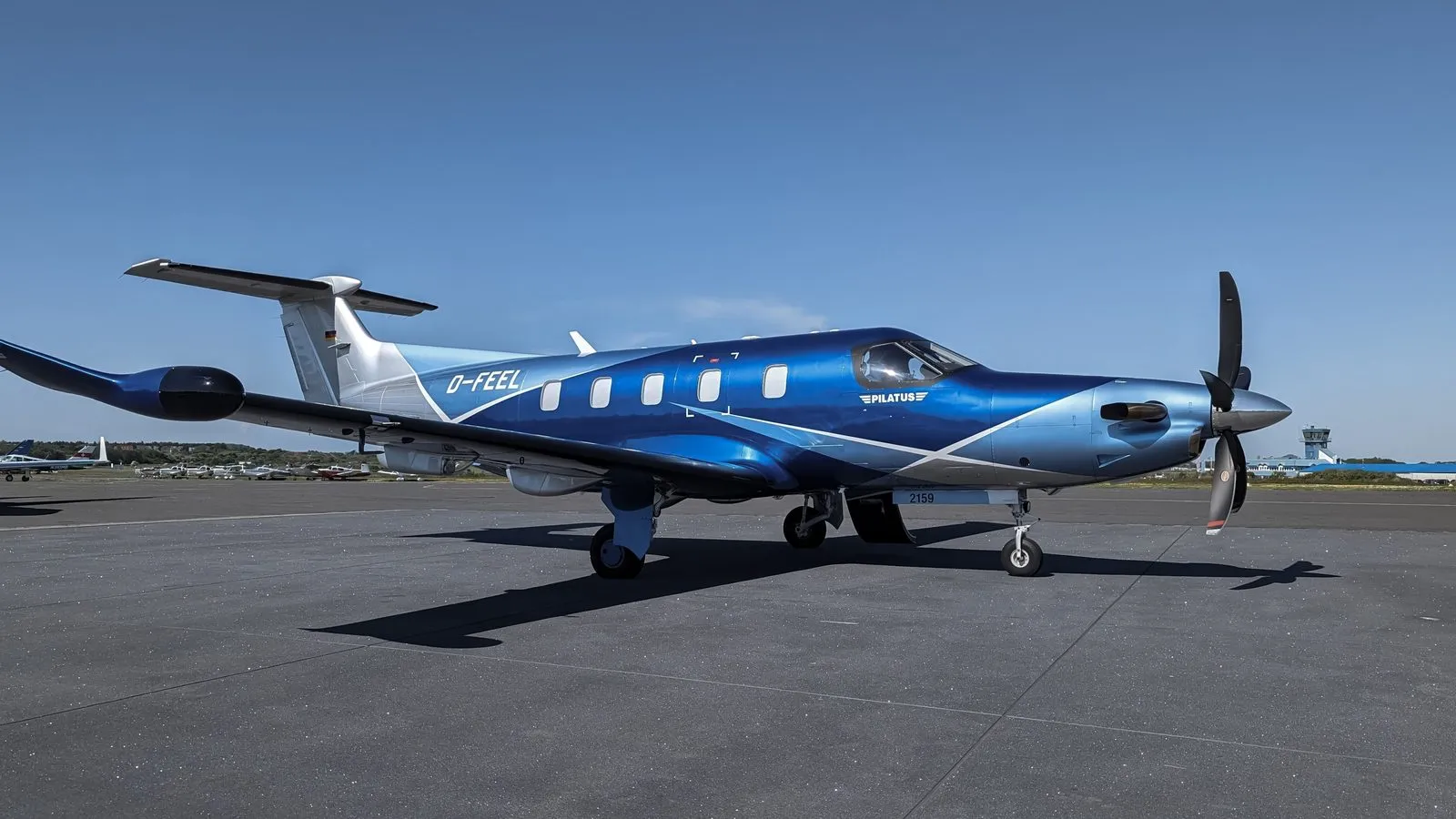
A Pilatus PC-12 (the PC-12/47E, including the version Pilatus markets as the NGX) can carry passengers under Part 135 in instrument conditions with one pilot, and three rules govern PC-12 Part 135 flying. The FAA widened single-engine IFR passenger flying in a 1997 rule that added equipment and engine-monitoring requirements; no exemption is needed. 135.101 requires a second in command for passenger IFR flights unless 135.105 applies, and 135.105 lets an approved three-axis autopilot replace the second pilot when your operations specifications authorize it. And at 10,450 lb maximum takeoff weight with a turboprop, the PC-12 needs no type rating under 61.31(a), though its pilots need the complex, high-performance and high-altitude training in 61.31(e) to (g).
If you’re still deciding which part your flying falls under, start with Part 91 vs Part 135 vs Part 91K.
What does the type certificate say about the PC-12?
The FAA type certificate data sheet for the PC-12 family is A78EU, Revision 39 of July 2, 2025, which covers the PC-12, PC-12/45, PC-12/47, PC-12/47E and PC-12/47G. The figures below are from its PC-12/47E section. The FAA sheet gives no maximum operating altitude or approved kinds of operation, so those two rows come from the European data sheet for the same airplane, EASA TCDS A.089 (Issue 11, July 7, 2025), section D.
| Item | PC-12/47E | Source |
|---|---|---|
| Engine | One Pratt & Whitney PT6A-67P, or PT6E-67XP on MSN 1720, 2001 and up | FAA A78EU |
| Maximum takeoff weight | 4,740 kg (10,450 lb) | FAA A78EU |
| Minimum crew | “One (1) pilot (left seat) -OR- Two (2) pilots” | FAA A78EU |
| Number of seats | “9 PAX and 2 pilot seats” | FAA A78EU |
| Maximum operating altitude | 30,000 ft | EASA A.089 |
| Approved operations | “IFR Day/Night; VFR Day/Night” | EASA A.089 |
The newest model on the FAA sheet, the PC-12/47G (MSN 3001 and up, approved January 13, 2025), has the same 10,450 lb takeoff weight and takes its crew and seat figures from the base PC-12 data, so this guide applies to it too.
The EASA data sheet describes “retractable landing gear with trailing-link main landing gear capable of grass and unprepared field operations.”
With nine passenger seats, the PC-12 stays under the 10-seat line at which Part 135 requires a second pilot or an airline transport pilot certificate. With a minimum crew of one pilot, a second pilot is required only when an operating rule calls for one.
Does a PC-12 need a type rating?
No. 61.31(a) requires a type rating for “large aircraft (except lighter-than-air),” “turbojet-powered airplanes,” powered-lift and “other aircraft specified by the Administrator through aircraft type certificate procedures.” A large aircraft is one “of more than 12,500 pounds, maximum certificated takeoff weight” (14 CFR 1.1). The PC-12 is a turboprop at 10,450 lb.
Before acting as pilot in command, a pilot needs three logbook endorsements, each from an authorized instructor.
| Endorsement | Rule | Why the PC-12 needs it |
|---|---|---|
| Complex airplane | 61.31(e) | 61.1 defines a complex airplane as one with “a retractable landing gear, flaps, and a controllable pitch propeller,” including airplanes with a full authority digital engine control. The PC-12 has all three. |
| High-performance airplane | 61.31(f) | “An airplane with an engine of more than 200 horsepower.” The FAA data sheet rates the engine at 1,200 shp for takeoff. |
| Pressurized, high altitude | 61.31(g) | “A pressurized aircraft (an aircraft that has a service ceiling or maximum operating altitude, whichever is lower, above 25,000 feet MSL).” The EASA data sheet gives a maximum operating altitude of 30,000 ft. |
Each has exceptions. A 135.293 competency check in a complex or high-performance airplane under an approved training program replaces those two endorsements, and a PIC proficiency check under Part 121, 125 or 135 in a pressurized aircraft replaces the high-altitude one.
Because the PC-12 is certificated for one pilot and isn’t turbojet-powered, the Part 91 PIC proficiency check in 61.58 doesn’t apply to it. The flight review and 90-day landings of 61.56 and 61.57 still do; see pilot training and currency tracking.
Can a PC-12 fly passengers single-engine IFR under Part 135?
Yes. The 1997 rule “Commercial Passenger-Carrying Operations in Single-Engine Aircraft Under Instrument Flight Rules” (62 FR 42364) expanded the passenger provisions and added “equipment requirements, as well as maintenance requirements to monitor engine reliability.” A single-engine operator has to meet four sections today.
Equipment: 135.163
Section 135.163 says “No person may operate an aircraft under IFR, carrying passengers, unless it has” a vertical speed indicator, a free-air temperature indicator, a heated pitot tube for each airspeed indicator, a power failure warning or vacuum indicator, an alternate static source, and two independent energy sources for the gyroscopic instruments. For a single-engine aircraft, paragraph (f) adds either “two independent electrical power generating sources” that can each carry the continuous loads of the required instruments and equipment, or a standby battery or alternate source “capable of supplying 150% of the electrical loads of all required instruments and equipment necessary for safe emergency operation of the aircraft for at least one hour.”
Over-the-top: 135.181
Section 135.181 leaves single-engine IFR alone and bars operating “a single-engine aircraft carrying passengers over-the-top,” with two exceptions: weather along the route that allows VFR under the ceiling and is forecast to stay that way until at least 1 hour after arrival (paragraph (c)), or conditions that allow “descent under VFR if its engine fails” (paragraph (d)(2)).
Over water: 135.183
Under 135.183, a land aircraft carrying passengers over water must fly “at an altitude that allows it to reach land in the case of engine failure,” unless it is taking off or landing. The multiengine alternative in paragraph (c) isn’t open to a single.
Engine trend monitoring: 135.421
Section 135.421 requires that “for each single engine aircraft to be used in passenger-carrying IFR operations,” the certificate holder’s maintenance program include the manufacturer’s engine trend monitoring program or an FAA-approved one, with written instructions for maintaining the equipment in 135.105 and 135.163(f) and (h). Paragraph (e) reaches dispatch, because it bars any passenger IFR flight “unless the certificate holder records and maintains in the engine maintenance records the results of each test, observation, and inspection” the program requires.
Can a PC-12 fly single-pilot under Part 135?
It can, if the operations specifications authorize it. Start from 135.99(a): no certificate holder may fly with less than the minimum crew in the operating limitations or flight manual “and required by this part for the kind of operation being conducted.” The airplane’s minimum is one pilot, and the seat-count rule in 135.99(b) (a second in command at “ten seats or more”) doesn’t reach a nine-seat airplane. For VFR flights with passengers, one pilot meets the crew rules. For IFR flights with passengers, 135.101 says: “Except as provided in § 135.105, no person may operate an aircraft carrying passengers under IFR unless there is a second in command in the aircraft.”
135.105 is the exception. An aircraft may fly without a second in command “if it is equipped with an operative approved autopilot system and the use of that system is authorized by appropriate operations specifications.” The autopilot must be “capable of operating the aircraft controls to maintain flight and maneuver it about the three axes,” and the FAA can attach conditions. For commuter operations (as defined in Part 119), the pilot in command also needs “at least 100 hours pilot in command flight time in the make and model.”
For a scheduler, this has two results. An inoperative autopilot turns a single-pilot IFR passenger leg into a two-pilot leg or a no-go, so it belongs on the release checks. The pilot’s instrument proficiency check also has to cover the autopilot. A PIC authorized to use the autopilot in place of a second in command must show “both with and without using the autopilot” that they can fly instrument operations and handle complex ATC instructions alone, once every 12 calendar months during the check (135.297(g)).
What does a Part 135 PC-12 pilot in command need?
135.243(a) requires an airline transport pilot certificate for passenger flights in a turbojet, in an airplane with 10 or more passenger seats, or in a multiengine airplane in commuter operations. A nine-seat single-engine turboprop is none of these, so the PC-12 falls under paragraphs (b) and (c).
| Flying | Certificate | Flight time | Source |
|---|---|---|---|
| VFR | Commercial, airplane category and class, plus an instrument rating or an ATP | 500 hours as a pilot, including 100 cross-country, 25 of them at night | 135.243(b) |
| IFR | Commercial, airplane category and class, plus an instrument rating or an ATP | 1,200 hours, including 500 cross-country, 100 at night and 75 actual or simulated instrument, at least 50 of those in actual flight | 135.243(c) |
Track these recurring checks for each PC-12 pilot.
- Every 12 calendar months, a written or oral knowledge test and a competency check (135.293). For a “single-engine airplane other than turbojet” the competency check is in the class of aircraft, so no PC-12 type check is required by the rule. The PIC also needs a line check in one of the types they fly (135.299).
- Every 6 calendar months, an instrument proficiency check for any PIC flying IFR (135.297(a)), with the autopilot portion once every 12 months for single-pilot crews.
How much PC-12-specific ground and flight training sits around these checks is set by the operator’s training program, which the FAA approves.
Which duty limits apply to PC-12 crews?
The kind of operation sets the duty rule.
- Part 135 on-demand: 135.267 limits flight time to 8 hours in any 24 consecutive hours for “a flight crew consisting of one pilot,” and 10 hours for two pilots “qualified under this part for the operation being conducted.” Every assignment needs at least 10 consecutive hours of rest in the 24 hours before its planned completion. The 10-hour figure needs a second pilot qualified for the operation. See Part 135 duty time limits.
- Part 91K: a fractional program follows 91.1059, with the same 8 and 10 hours and a 14-hour duty period. See Part 91K duty and rest.
- Part 91: an owner flying their own PC-12, or a corporate department, has no FAA duty limits outside subpart K. See Part 91 duty time limits.
The 8-hour single-pilot limit is the one PC-12 schedules run into. A day of several short legs, or two long legs with a fuel stop, can reach it before the duty day feels long, and it counts any other commercial flying the pilot did in the same 24 hours.
How should you schedule and release a PC-12 trip?
These trip shapes are illustrative, not drawn from any operator’s records.
- A multi-stop day with one pilot. Four or five short legs, passengers on some and empty positioning on others. The binding limits are the 8 hours of single-pilot flight time and the 10 hours of rest before the last leg’s planned completion. A passenger IFR leg needs the autopilot working.
- A long leg with a fuel stop. Check whether the planned route stays within the over-the-top and over-water rules for a single, and whether the fuel stop’s airport is adequate.
- A short or unpaved strip at one end. The EASA data sheet says the main gear is “capable of grass and unprepared field operations,” but 135.229(a) still bars using any airport “unless it is adequate for the proposed operation, considering such items as size, surface, obstructions, and lighting.” With passengers at night, the pilot must determine the wind direction, and the landing area must be marked by boundary or runway marker lights (135.229(b)).
Put the single-engine questions into your flight risk assessment tool so the pilot answers them before release:
- Is any part of the route over water beyond gliding distance of land, or over-the-top without a VFR descent available?
- For a passenger IFR leg with one pilot: is the autopilot working, and is the 135.105 authorization in the operations specifications?
- Is the runway surface paved, gravel or grass, and is it wet, soft or contaminated?
- Is the pilot near the 8-hour flight time limit by the last leg?
- Is any item coming due (below) before the trip ends?
What maintenance does a PC-12 scheduler need to know about?
The shop or the maintenance tracking service runs the maintenance program. The scheduler needs a view of what comes due by date, hours or cycles, and how far away it is at the airplane’s current use, so a trip isn’t booked across an inspection or a limit. Two Part 135 items affect the booking directly:
- An open defect that grounds the airplane, or an inoperative item a leg depends on (the autopilot for single-pilot IFR, a power source 135.163 requires).
- The engine trend monitoring results 135.421(e) requires to be recorded before passenger IFR flights.
What should you record for each PC-12 trip’s cost?
This guide quotes no PC-12 hourly costs or fuel burns, because they depend on the airplane, the engine, the program and the mission. Record these per trip and build your own numbers from them.
- Fuel uplifted at each stop, with the price paid
- Flight time and cycles per leg, which drive hourly and cycle-based reserves
- Positioning legs, flown empty but still costing fuel and crew time
- Crew costs, such as a second pilot’s day rate if you fly two-pilot IFR, hotels and meals on overnights
- Landing, parking and handling fees, including at small or private fields
Aircraft operating cost per hour separates the variable, fixed and per-trip costs. For charter, how to price a charter trip covers the hourly rate, positioning, minimums and federal excise tax.
What changes when a PC-12 goes on a Part 135 certificate?
If the PC-12 has been flying under Part 91 and moves to a charter certificate, these rules change.
| Area | Part 91 | Part 135 |
|---|---|---|
| Single-pilot IFR with passengers | Allowed | Needs a 135.105 autopilot authorization in the operations specifications |
| PIC experience | Certificates, ratings, endorsements and currency | Plus 1,200 hours for IFR (135.243(c)) |
| Checks | Flight review every 24 months | Knowledge test and competency check every 12 months, line check every 12, instrument proficiency check every 6 |
| Duty and rest | No FAA limits outside subpart K | 135.267 |
| Over-the-top and over water | General rules | 135.181 and 135.183 for a single |
| Maintenance | Part 91 inspection program | Plus the 135.421 engine trend monitoring and written instructions for the IFR equipment |
Running a PC-12 in Avion Desk
Every save of a PC-12 trip is checked for the aircraft, the crew and duty, and the result shows each time you save; a problem is named, and an admin’s override is recorded with a note. On the plan for charter operators, single- and two-pilot crews are checked against 135.267. Each pilot’s certificates, training requirements and training records sit on their profile, most urgent first, so a 6-month instrument check coming due shows before it lapses, and seating a pilot who isn’t qualified on the aircraft is flagged. A trip is released only after its checks, the aircraft’s state and a risk assessment you write yourself have passed, with the airplane’s items forecast from its use and a grounding defect blocking the release. See the crew features, release and risk and pricing.
To try it, start a free trial and add your PC-12 with its crew, its next inspections and your single-engine risk questions, on the plan for charter operators if you fly it under Part 135, or request a demo.
Frequently asked questions
Do you need a type rating to fly a Pilatus PC-12?
No. Under 61.31(a), type ratings are required for aircraft over 12,500 lb and turbojets, and the PC-12 is a 10,450 lb turboprop. You do need the complex, high-performance and high-altitude endorsements in 61.31(e), (f) and (g), unless an exception applies.
Can a PC-12 carry passengers IFR under Part 135?
Yes. The 1997 single-engine IFR rule allows it, with the equipment in 135.163, the over-the-top and over-water limits in 135.181 and 135.183, and engine trend monitoring under 135.421.
Can a PC-12 be flown single-pilot under Part 135?
Yes, VFR, and IFR with passengers if the operations specifications authorize an approved three-axis autopilot in place of a second in command under 135.105. Without that authorization, 135.101 requires a second in command for passenger IFR flights.
How many hours does a Part 135 PC-12 captain need?
For IFR, 1,200 hours as a pilot, including 500 cross-country, 100 night and 75 instrument (50 in actual flight), with a commercial certificate and instrument rating (135.243(c)). For VFR only, 500 hours. An ATP isn’t required because the PC-12 has fewer than 10 passenger seats and one engine.
How many passengers can a PC-12 carry?
Nine. The FAA type certificate data sheet lists “9 PAX and 2 pilot seats” (TCDS A78EU).
This article explains the rules in plain language and isn’t legal advice; the regulation text governs.