An aircraft’s operating cost per hour is the sum of two numbers: the variable (direct) cost of each flight hour, such as fuel, maintenance reserves and engine programs, plus the fixed annual costs, such as crew salaries, hangar and insurance, divided by the hours you fly in a year. The real cost of a trip adds a third layer on top: fees and expenses that belong to that trip alone, like landing fees, handling, crew hotels and catering. Most hourly figures you hear quoted include only the first number, which is why they come in well under what a trip really cost.
All numbers below are illustrative. They are round on purpose so the arithmetic is easy to follow. They are not market data, not quotes for any aircraft type, and not current fuel or fee prices. Use your own invoices and budget in their place.
What goes into aircraft operating cost per hour?
Every cost a flight operation pays falls into one of three buckets. To sort a cost, ask what makes it go up.
| Bucket | What drives it | Typical lines |
|---|---|---|
| Variable (direct) cost | Each hour flown | Fuel, maintenance reserves, engine and APU programs |
| Fixed annual cost | Having the aircraft and the team, flown or not | Crew salaries and benefits, hangar, insurance, recurrent training, subscriptions, management |
| Per-trip cost | Going somewhere specific | Landing, handling, parking, overnight fees, catering, crew travel, international fees, positioning legs |
Crew travel expenses (hotels, meals, ground transport) are variable too, but they move with nights away more than with hours flown, so it’s cleaner to record them against the trip that caused them.
Variable costs: direct operating cost per flight hour
The direct operating cost of an aircraft is what each hour of flying consumes. The common lines are:
- Fuel. Usually the largest single line. Burn per hour times the price you actually paid. Price varies by airport and vendor, so the honest number comes from what was bought on each leg.
- Maintenance reserves. Money set aside per hour for scheduled inspections, parts and labor that come due with use. Putting it away by the hour keeps a heavy inspection from landing on one month’s budget as a surprise.
- Engine and APU programs. Many operators enroll engines (and the APU) in hourly programs that charge a fixed rate per hour run. If you’re not enrolled, you reserve for overhauls yourself at a rate per hour.
- Consumables. Oil, filters and small parts that wear with use. Often small enough to fold into the maintenance reserve.
Fixed costs: what you pay whether the aircraft flies or not
Fixed costs are the price of being ready to fly. They arrive every year whether you fly 150 hours or 600:
- Crew salaries, benefits and payroll costs
- Hangar rent
- Hull and liability insurance
- Recurrent training for pilots, and for maintenance staff if you have them
- Subscriptions: charts and navigation databases, weather, connectivity, software
- Management and administration: a management fee, or the share of office staff time spent on the aircraft
Some operators also count depreciation or the cost of the capital tied up in the aircraft. Whether that belongs in your number depends on what question you’re answering. For “what did this trip cost us in cash,” leave it out. For “what does owning this aircraft really cost,” include it and say so.
Per-trip costs: what one specific trip adds
These come from where you go and how long you stay:
- Landing fees
- Handling and FBO fees, sometimes waived or reduced with a fuel purchase
- Aircraft parking and overnight fees
- Catering
- Crew hotels, meals and ground transport
- International costs: permits, customs and overflight fees, and any outside trip support
- Positioning legs, the flights with nobody aboard to get the aircraft to the passengers or home again. Each positioning hour costs the full variable rate, and nobody rides on it.
How to calculate the cost of a flight: a worked example
Every figure in this trip is illustrative.
The assumptions
The aircraft’s variable rate
| Line | Arithmetic | Per flight hour |
|---|---|---|
| Fuel | 240 gallons per hour × $5.00 per gallon (an illustrative price, not a market quote) | $1,200 |
| Maintenance reserve | set by the operator | $500 |
| Engine program | 2 engines × $250 per engine per hour | $500 |
| APU program | set by the program | $50 |
| Variable cost per flight hour | 1,200 + 500 + 500 + 50 | $2,250 |
The year’s fixed costs
| Line | Per year |
|---|---|
| Crew salaries and benefits (two pilots) | $400,000 |
| Hangar | $120,000 |
| Insurance | $80,000 |
| Recurrent training | $100,000 |
| Subscriptions | $40,000 |
| Management and administration | $60,000 |
| Total fixed | $800,000 |
The aircraft flies 400 hours a year, so fixed cost per flight hour is $800,000 ÷ 400 = $2,000.
The trip
The aircraft is based at its home airport. The passengers are in another city, one hour away. They fly to a destination 2.5 hours from there, stay two nights, and come back.
| Leg | Route | Passengers | Flight hours |
|---|---|---|---|
| 1 | Home base to pickup city (positioning) | None | 1.0 |
| 2 | Pickup city to destination | 4 | 2.5 |
| 3 | Destination to pickup city | 4 | 2.5 |
| 4 | Pickup city to home base (positioning) | None | 1.0 |
| Total | 7.0 |
Five of the seven hours carry passengers. Two hours are positioning.
The trip, line by line
| Line | Arithmetic | Amount |
|---|---|---|
| Fuel | 7.0 hr × $1,200 | $8,400 |
| Maintenance reserve | 7.0 hr × $500 | $3,500 |
| Engine program | 7.0 hr × $500 | $3,500 |
| APU program | 7.0 hr × $50 | $350 |
| Variable subtotal | 7.0 hr × $2,250 | $15,750 |
| Landing fees | 3 landings × $200 (none at home base) | $600 |
| Handling at destination | one charge | $800 |
| Parking at destination | 2 nights × $150 | $300 |
| Catering | 2 passenger legs × $400 | $800 |
| Crew hotels | 2 pilots × 2 nights × $200 | $800 |
| Crew meals | 2 pilots × 3 days × $75 | $450 |
| Crew ground transport | one charge | $200 |
| Per-trip subtotal | 600 + 800 + 300 + 800 + 800 + 450 + 200 | $3,950 |
| Out-of-pocket cost of the trip | 15,750 + 3,950 | $19,700 |
| Share of fixed cost | 7.0 hr × $2,000 | $14,000 |
| Fully allocated cost of the trip | 19,700 + 14,000 | $33,700 |
The trip is domestic. An international version would add permits, customs and overflight fees to the per-trip subtotal.
What the example tells you
Three numbers fall out of the same trip, and each answers a different question:
| Measure | Arithmetic | Result |
|---|---|---|
| Variable cost per flight hour | from the rate table | $2,250 |
| Fully allocated cost per flight hour | $33,700 ÷ 7.0 hr | about $4,814 |
| Fully allocated cost per passenger hour flown | $33,700 ÷ 5.0 occupied hr | $6,740 |
If someone said this aircraft “costs $2,250 an hour,” they’d be quoting the first row. The passengers’ 5 hours of travel cost the company three times that, once you count the positioning legs, the trip’s fees and the aircraft’s share of the year.
Why a quoted cost per hour is often misleading
An hourly figure is useful, but only when you know what’s inside it. Three things go wrong most often.
Costs are left out
The most common hourly number is variable cost only. Sometimes it’s even narrower: fuel plus an engine program, with maintenance reserves skipped. Per-trip fees almost never appear in an hourly rate, because they don’t scale with hours. A two-hour hop into a busy airport with high handling fees and an overnight can carry more trip fees than a four-hour flight to a quiet field and back the same day.
When you’re handed a cost per hour, ask which lines it includes. If the answer is “fuel and maintenance,” you know the fixed and per-trip layers are still to come.
Positioning and empty legs get forgotten
In the example, 2 of 7 hours had no passengers. Someone pricing the trip from occupied hours alone would count 5.0 hours × $2,250 = $11,250 of variable cost and miss $4,500. A positioning leg burns the same fuel and runs up the same engine and maintenance hours as any other leg.
The same applies to maintenance ferry flights, training flights and repositioning between trips. Those hours carry cost but no passenger. Decide where they go: to a trip, to the fleet’s overhead, or to a training budget. Then do it the same way every time.
Utilization changes fixed cost per hour
Fixed costs don’t care how much you fly, so fixed cost per hour depends entirely on the hours you spread them across. Using the same illustrative $800,000 a year and the same $2,250 variable rate:
| Hours flown per year | Fixed cost per hour ($800,000 ÷ hours) | Variable cost per hour | Total cost per hour |
|---|---|---|---|
| 200 | $4,000 | $2,250 | $6,250 |
| 400 | $2,000 | $2,250 | $4,250 |
| 600 | about $1,333 | $2,250 | about $3,583 |
| 800 | $1,000 | $2,250 | $3,250 |
The aircraft and the crew are the same in every row. Fly half as much and the total hourly cost rises by about half. That’s why a cost per hour taken from one operator’s budget can’t be moved to another’s: their utilization is part of the number.
It also means a flight department’s cost per hour can look worse in a slow year without anyone spending more. If leadership compares years, show fixed and variable separately so the change is easy to explain.
Fixed vs variable aircraft costs: which number should you use?
Each question has its own right number:
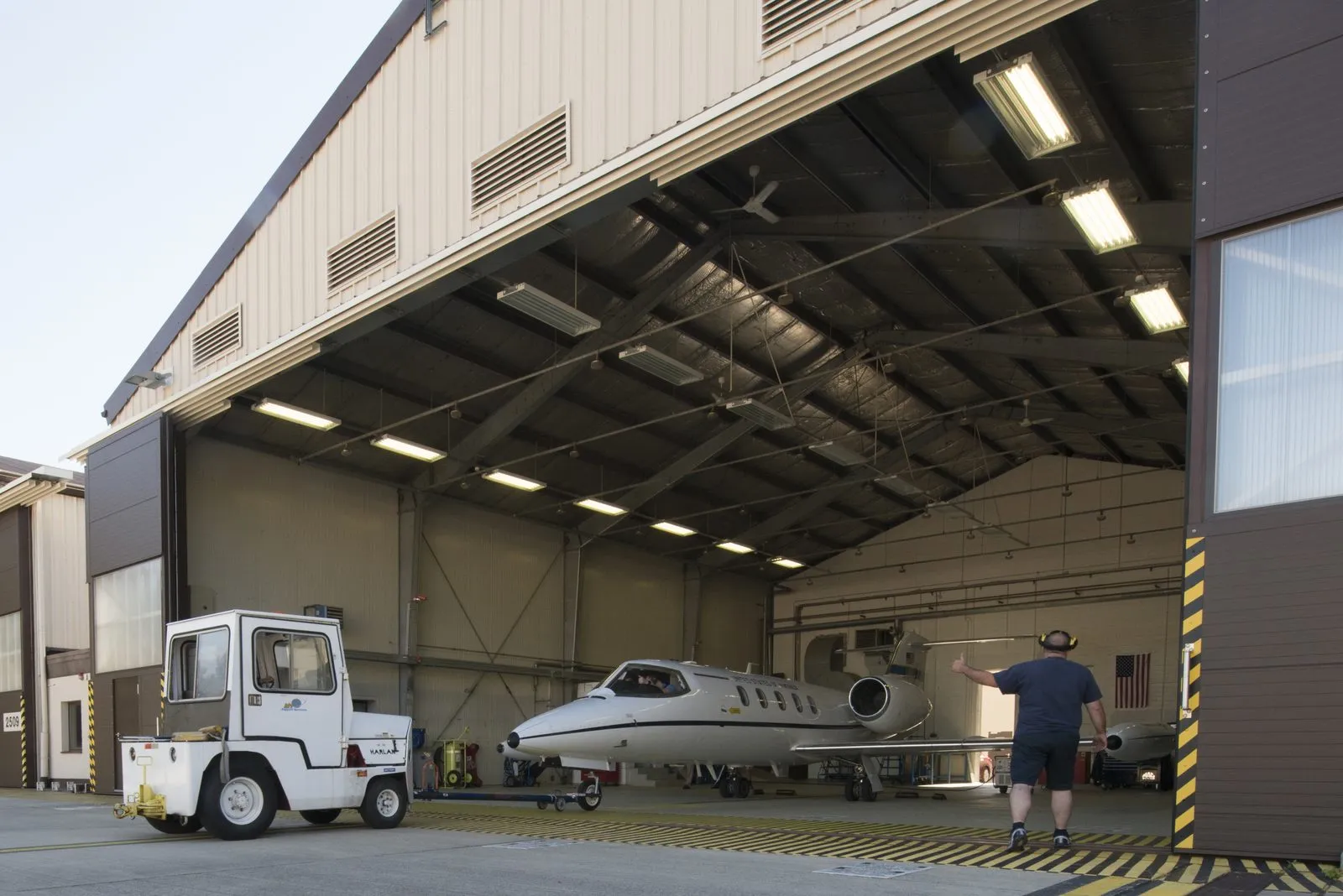 Photo: Airman 1st Class Taylor Slater, U.S. Air Force (public domain)
| Question | Use |
|---|---|
| What did flying this trip add to our spending? | Variable cost of every leg, including positioning, plus that trip’s per-trip costs |
| What does this trip cost if it carries its share of the year? | The above, plus fixed cost per hour × hours flown |
| Should we fly this trip or buy a ticket or a charter? | Out-of-pocket cost against the alternative, with a note on the fixed share |
| What should we budget for next year? | Fixed total plus variable rate × planned hours plus an allowance for per-trip costs |
Whatever you choose, write down the method and the utilization assumption, and use them the same way all year.
How a company may charge for trips
Once you know what a trip cost, the next question is often who pays it. That depends on the rules the aircraft operates under. A Part 91 flight department is generally limited in what it can charge for flights, while a Part 135 or Part 91K operator works under its own certificate or program rules. Our comparison of Part 91, Part 135 and Part 91K covers the basics, and flight department chargebacks goes into charging cost back to internal users.
Taxes add their own layer. Federal excise taxes can apply to fuel or to commercial air transportation; NBAA keeps a guide to federal excise taxes. Personal use of a company aircraft raises separate questions: the IRS has its own rules for valuing the benefit, and a public company generally must disclose personal flights by its executive officers and directors in its SEC reports at their aggregate incremental cost, which NBAA notes differs significantly from the IRS rules. This is general background, not tax or legal advice; those are questions for your tax advisor. They will need accurate costs by trip, with each leg’s purpose recorded.
How to capture trip costs as they happen
Most trip totals go wrong because a cost was never recorded, was recorded twice, or was entered against the wrong trip. A few habits prevent all three.
Record fuel by leg
Write down the uplift and price for each leg, not one fuel total for the trip. Fuel prices vary by airport and vendor, and legs vary in burn. Per-leg records let you see what each leg cost, check the fuel invoice against what was pumped, and assign a positioning leg’s fuel correctly.
Keep the receipt with the expense
Crew hotels, meals, handling invoices and catering all arrive as paper or email receipts, often days apart. Attach each receipt to its expense when it’s entered and give it a category (fuel, handling, catering, crew travel). Categories are what let you total “crew travel” across a quarter or compare handling fees between airports.
Approve expenses before they count
An expense entered by a pilot on the road should be reviewed before it lands in the trip’s total: the right trip, the right category, the receipt attached. Approval also gives you one place to catch duplicates, like a handling fee entered by the crew and again from the FBO invoice. If an approved expense is edited later, it should be reviewed again.
Close the trip
Set a point, a week or two after the trip, when you check that every leg has fuel recorded and every expected expense is in. Invoices for handling and parking often show up late. A trip closed too early looks cheaper than it was. If you keep trip details on paper or in a spreadsheet, a consistent trip sheet makes this check much faster.
Frequently asked questions
What is a good aircraft operating cost per hour?
There’s no general good number: it depends on the aircraft, how it’s maintained, where it flies and how many hours a year it flies. Compare your own costs year over year with the same method, and keep fixed and variable costs separate so a change in utilization doesn’t look like a change in spending.
What is the difference between direct operating cost and total operating cost?
Direct operating cost is the variable cost of each flight hour: fuel, maintenance reserves, engine and APU programs. Total operating cost adds the fixed annual costs, such as crew, hangar, insurance and training, usually spread over the year’s flight hours.
Should positioning legs be charged to the trip?
If the positioning leg exists only because of the trip, its cost belongs to the trip. Leaving it out understates what the trip cost; in the example above, it would have missed $4,500 of variable cost.
How does utilization affect cost per hour?
Fixed costs are spread over the hours flown, so flying fewer hours raises the fixed cost of each one. In the illustrative example, cutting from 400 to 200 hours a year raises the total cost per hour from $4,250 to $6,250 with no change in spending.
Is cost per trip the same as the price of a charter?
No. Cost is what the operator spends; a charter price also covers the operator’s margin, its own fixed costs and any taxes due. See how to price a charter trip for that side.
Tracking trip costs in Avion Desk
Avion Desk keeps your vendors and their fuel prices, and records the fuel uplift on each leg. Expenses are entered with their receipts and categories, and an expense counts only after it’s approved; if an approved expense is edited, it must be approved again. Each trip shows what it cost, rolled up. See the accounting features. To try it, start a free trial and enter one recent trip’s costs to see its full total, or request a demo.